Enter password to view case study
Turning industry perception on its head
Client
Ethical Agent Network
Sector
Community Network
Accreditation only works when it’s hard to get and defendable.
Brand Strategy
Visual Identity
Creative Direction
Style Guide
Web Design
Development
Jerry Lyons started as a journalist, moved into PR for estate agents, and spent years inside the industry watching how it actually works. He found himself in regular contact with the agents he liked working with most. A core group, running their businesses on different terms from the rest of the industry. Community-minded. Honest about fees. Building relationships rather than transactions. Choosing to be the agent people actually wanted to deal with.
Jerry wanted to build a network around that group. Not a directory. Not a trade body. An accreditation people had to earn, and that the public had a reason to recognise.
The friction underneath was simple. Estate agents share a public reputation for a reason. Trust in the industry is among the lowest of any consumer category in the UK. And all existing infrastructure that's supposed to protect against that is faceless and means nothing to a homebuyer trying to choose between two agents on a high street. The good agents pay the same fees as the bad ones, wear the same badges, and have no credible way to signal they're different.
Jerry wanted the good agents to have something the bad ones couldn't fake.
The mechanism for keeping standards high inside the existing organisations is (in most cases) a payment.
The lie is that membership equals trust. The public has learned not to believe it.
What's missing is an accreditation that does what accreditations were supposed to do. Hard to get and easy for the public to recognise. Defended by the organisation that issues it. Worth wearing, because the agents wearing it actually meet the standard underneath.
Development by Laura Ockenden
The brand
When you’re building a brand around ethics, you’ve got to make sure that all the bases are covered. Everything had to measure up to high standards.
Agents apply and are filtered against real criteria: review thresholds, community involvement, transparent advertising, demonstrable ethical work locally. Jerry turns down agents who aren't a fit, and that refusal is what gives the accreditation its value.
No two members share a postcode, which turns the relationship between them from competitive to collaborative. They commit to a promise document and are reviewed against it regularly. Membership isn't permanent, and that's what makes it credible to the public.
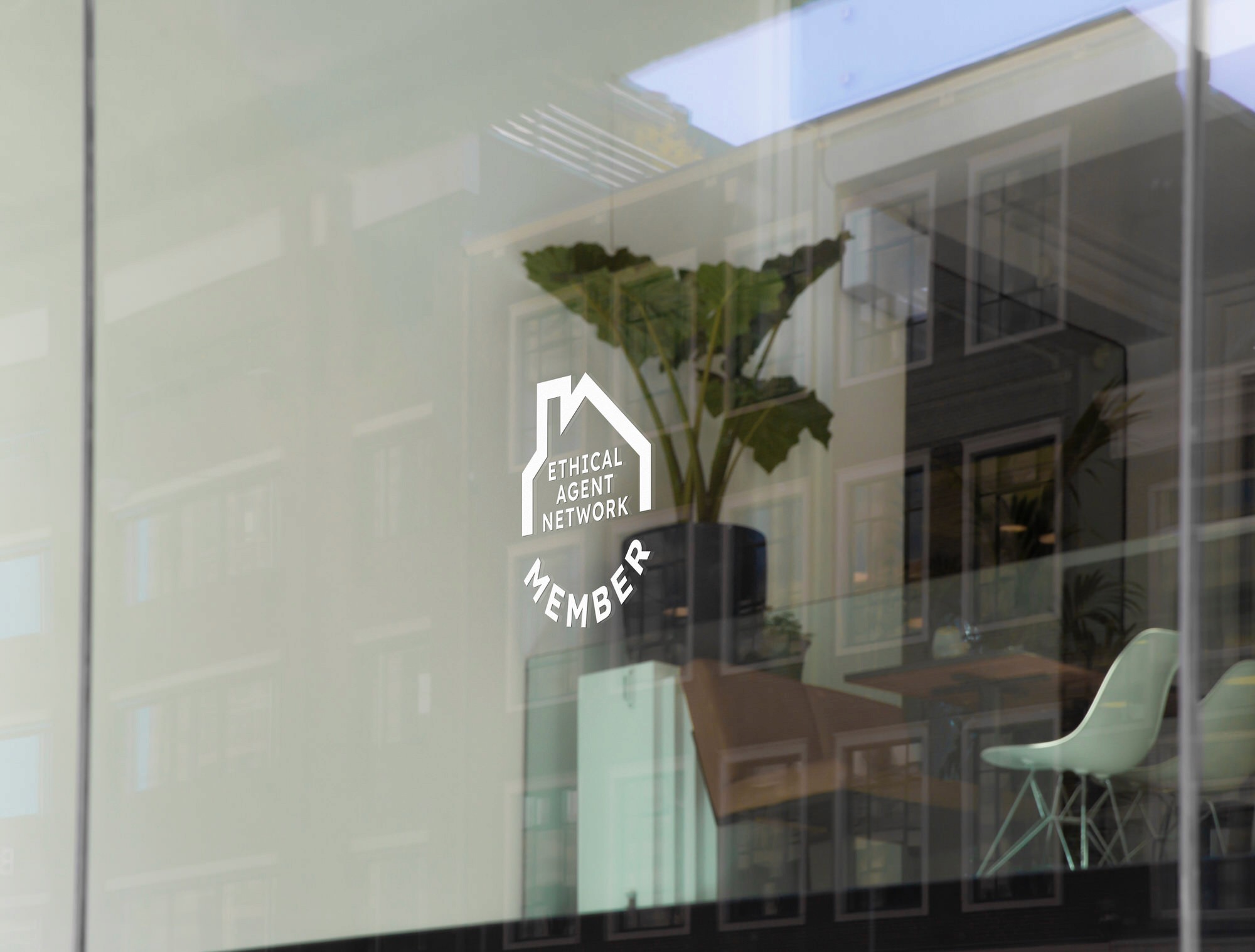
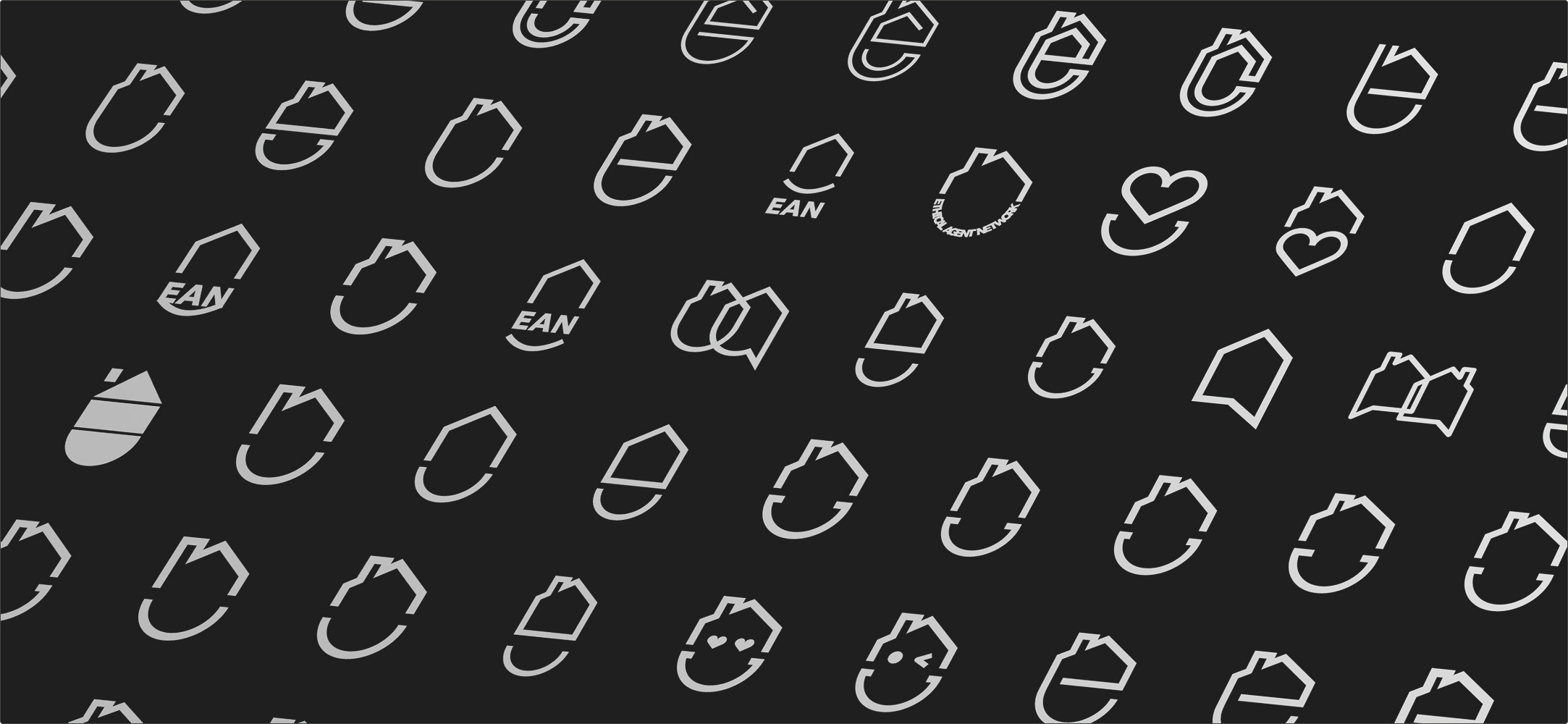
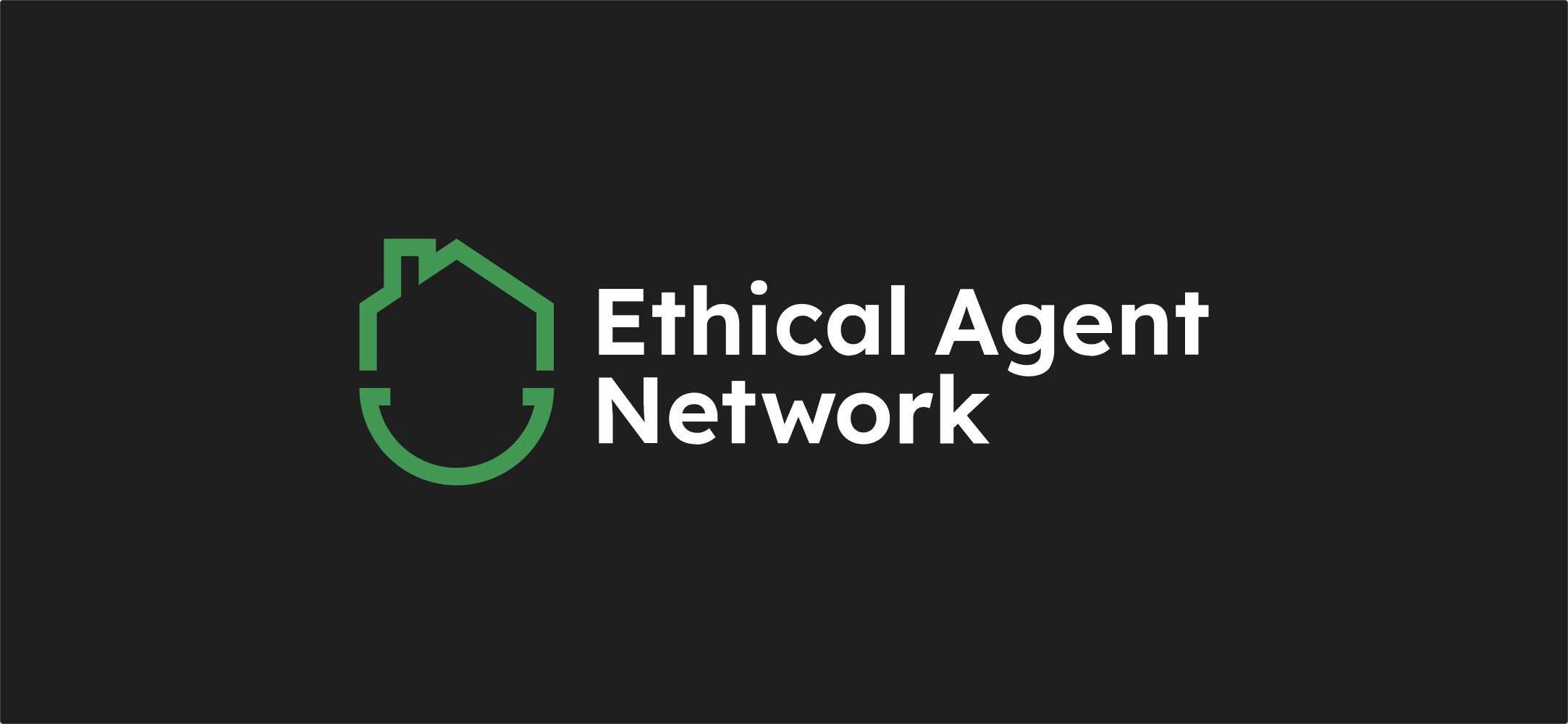
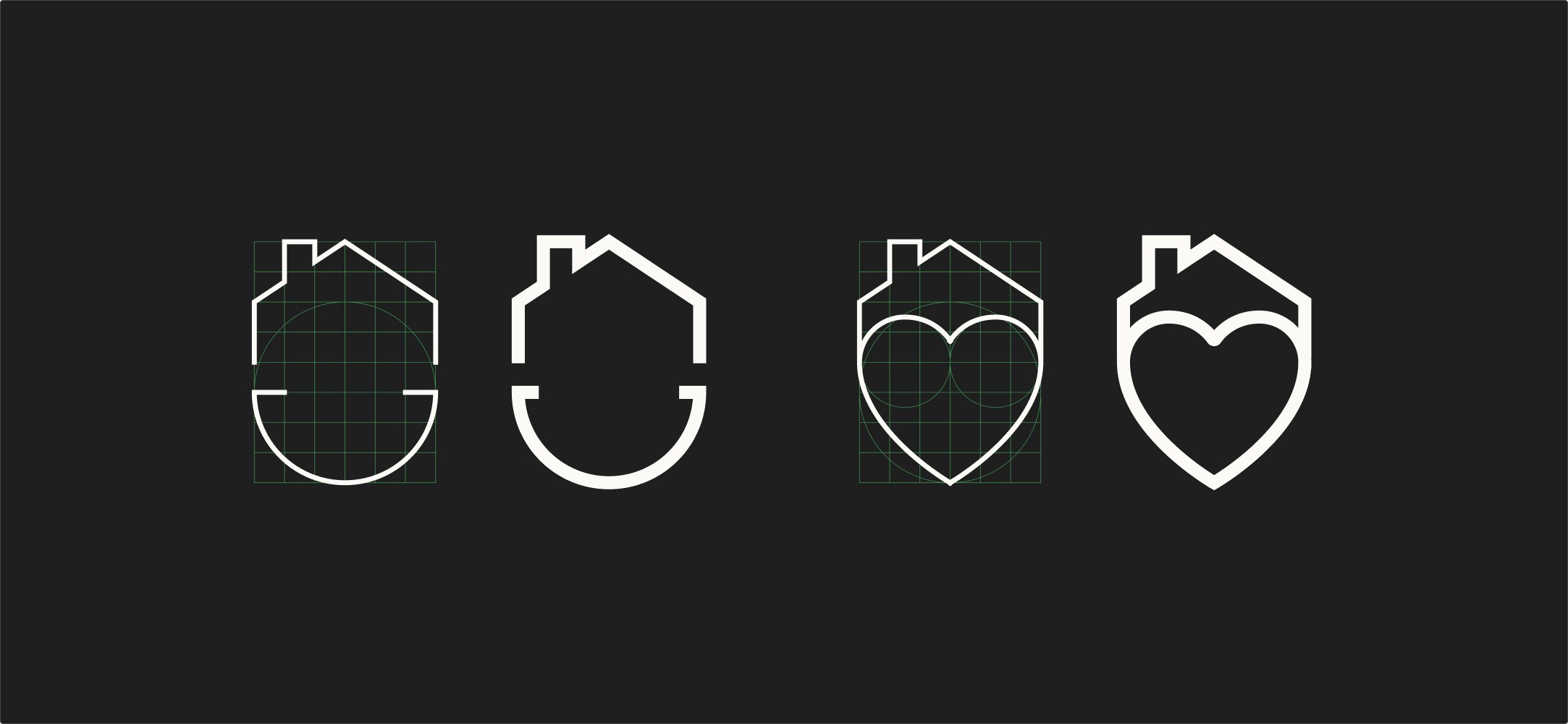
The brand mark is a restrained outline of a house with a smile underneath. Not a human inside the logo, no generic gestures. It’s a happy home. The visual identity rejects complexity, avoids elitist gold colour schemes and ignores soulless crests. Buyers and Tenants don't want to work out what a badge means before they trust it.
We selected green as the primary brand colour to share the environmentally-friendly credentials and pointedly not the colour the industry uses. Green as a colourway usually sits outside the property category and therefore stands out against the usual noise.
The System
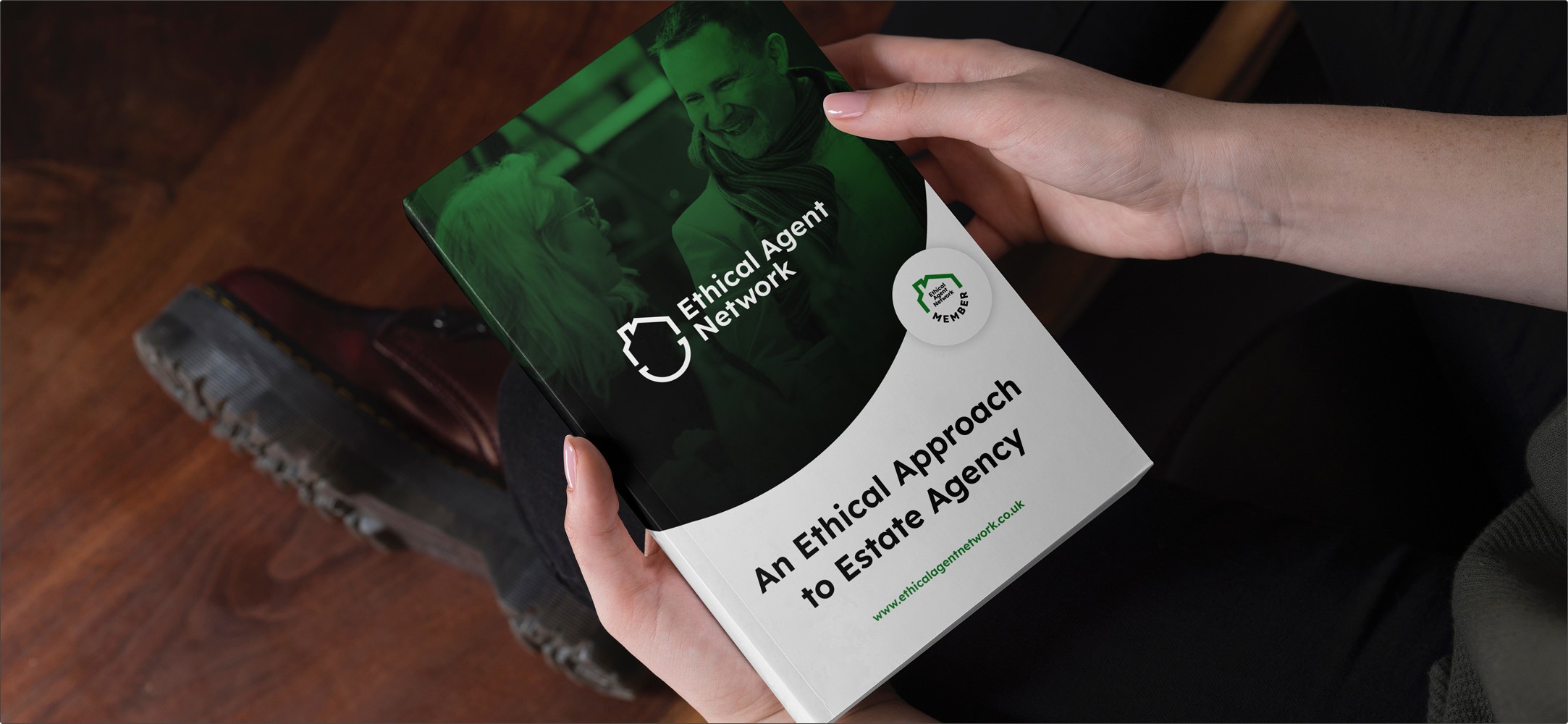
The accreditation only does its job if members can actually use it. The member pack and gated website pages are built around that need.
The pack does two jobs at once. It onboards the member. And it equips the agent to use the accreditation as a tool in their own local marketing. The brand becomes something members carry into their communities, which is the only way an accreditation builds public recognition over time.
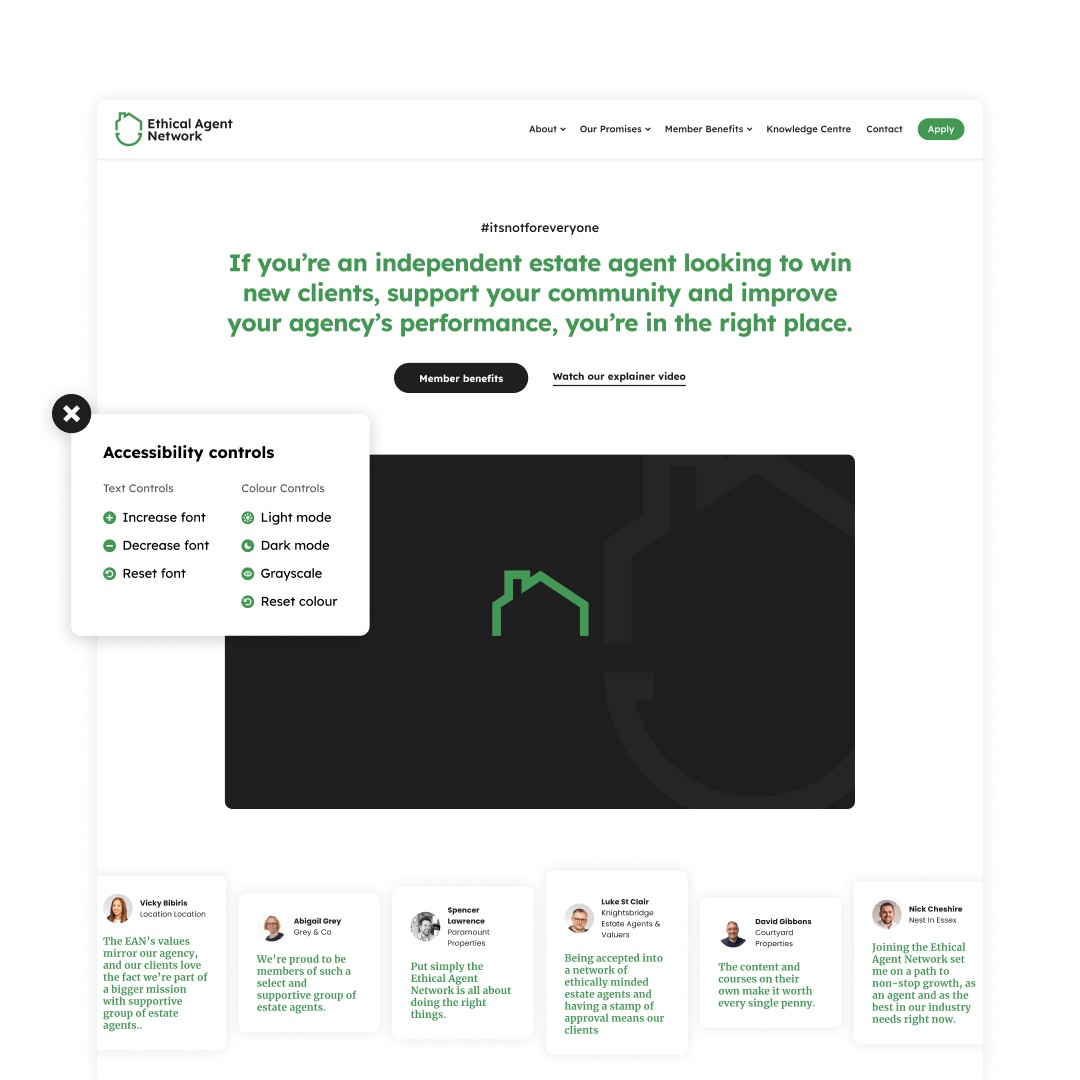
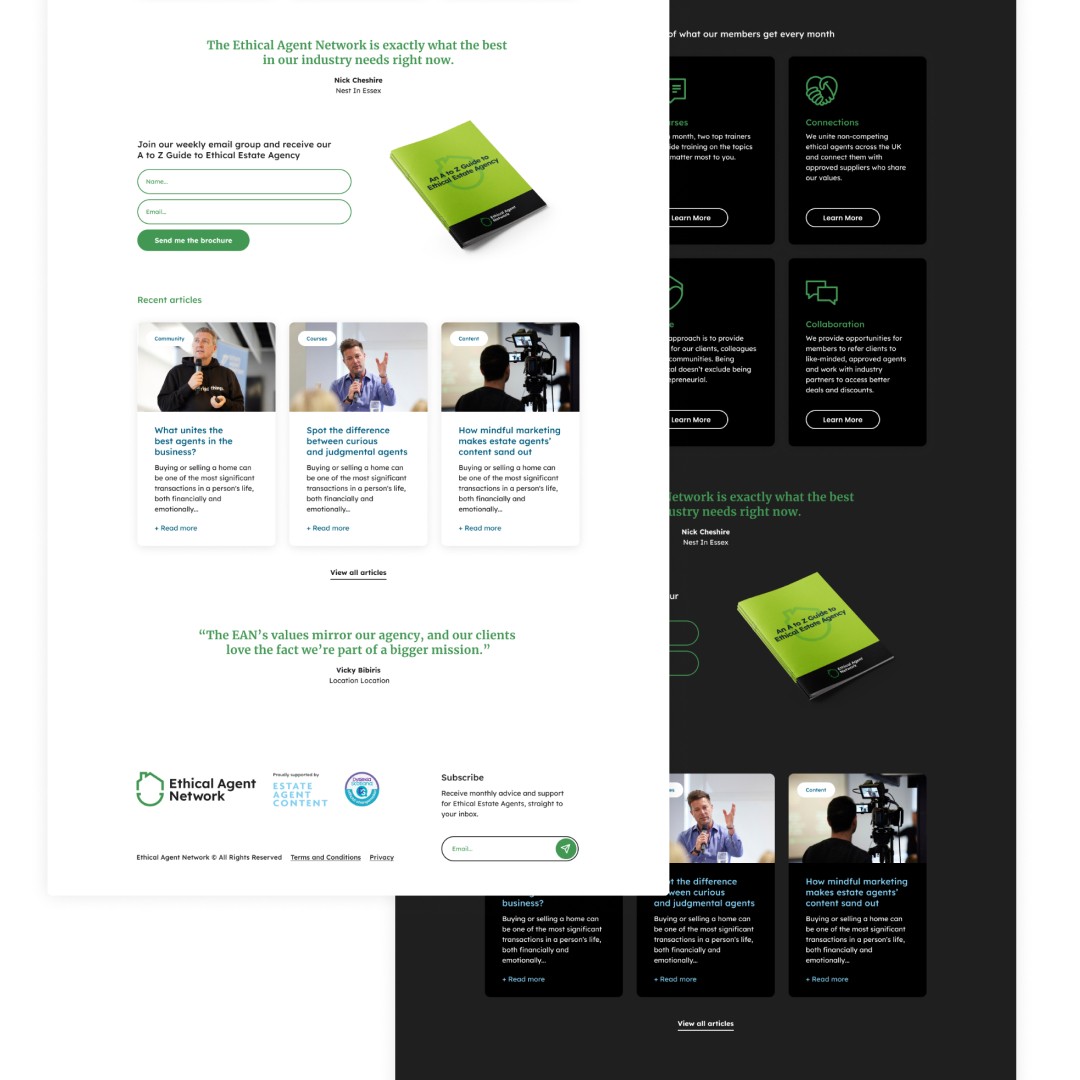
We designed and developed a carbon-aware website, built with accessibility at its roots: contrast ratios, dark mode, font scaling, greyscale options. A network built on ethical practice can't launch a site that ignores the obvious places where ethics show up online. With Mailchimp integration, automations and nurture sequences to ensure the website acts as a funnel rather than a showpiece, the technical decisions work to enhance the brand position.
Supported with sub-brands, EAN extends into the charity sector through a sub-mark that carries the parent's architecture. Members donate, nominate charities, and EAN matches the giving. Same shape, different gesture, same family. Karma Club is the proof that the brand architecture holds, and that ecosystem logic is what lets the brand extend and grow.
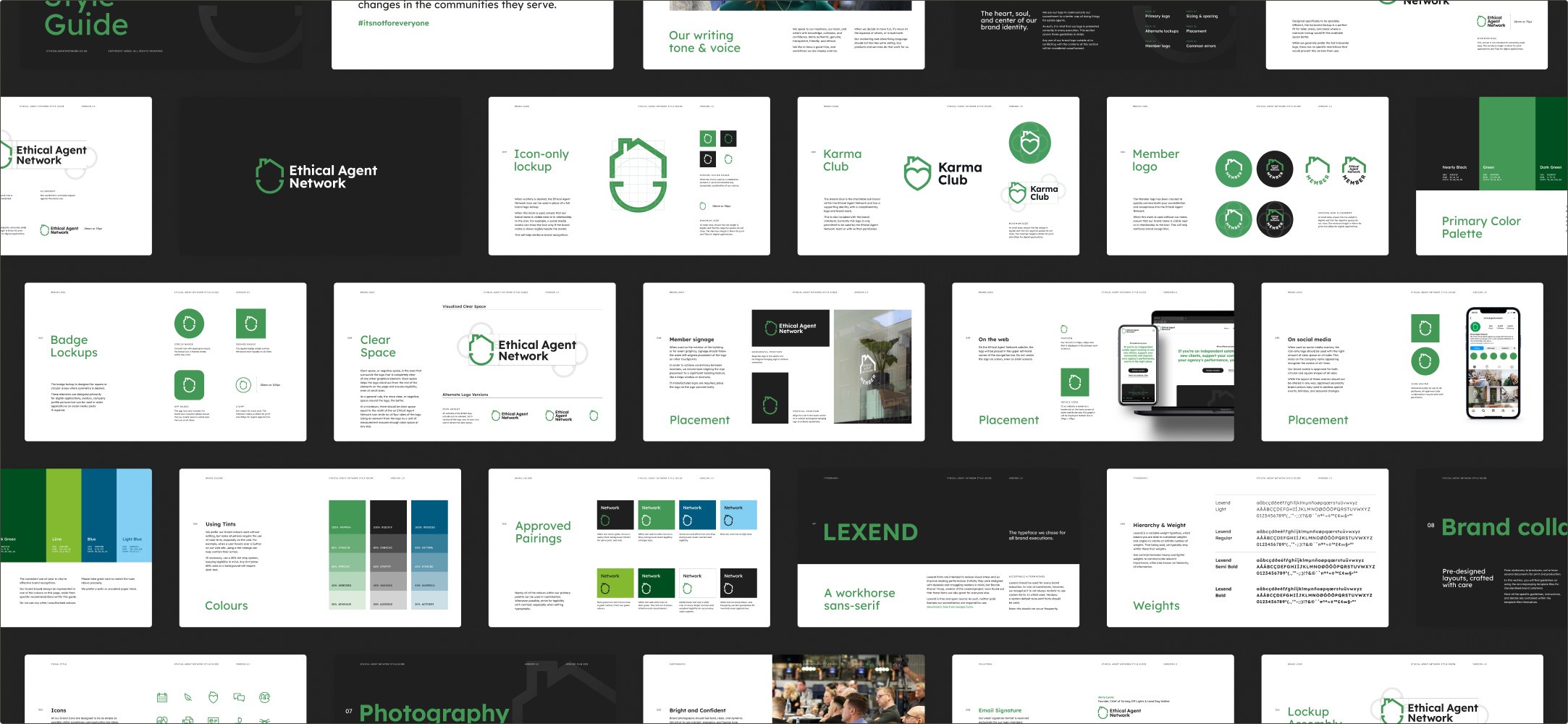


This is more important than a single deliverable. Brand strategy, visual identity for the parent network and sub-brands, a WordPress website with accessibility and carbon-conscious specifications. Member pack including digital and physical assets, underpinning an ongoing creative partnership across nine years and counting.
The Ethical Agent Network is the accreditation an estate agent earns by being the agent they should already have been. Hard to get and defendable. Built for agents who don't want to fight the industry's reputation alone, and for homebuyers, tenants, landlords and sellers who want a credible signal in a category that has trained them to ignore one.